Showing posts with label farmers. Show all posts

Saturday, August 10, 2019

Asparabus farm tour

ASPARABUS TOUR


I have been trying to find the time to write this blog post for a while and regret that I couldn't find the time to post it while Asparagus season was in it's peak but I wanted to make sure I let you know how great this incredibly short season is.  Asparagus like strawberries has a very short 6 week peak season in the spring/summer.  I love this time of year because the weather is fantastic and my favourite foods are at their best.

I had the pleasure of getting invited to join the #AsparabusTour in June, hosted by the https://foodiesonfoot.ca/.  They are a great team of people that have been hosting this invite only Asparagus Tour.  It's a full day of all things asparagus that begins with hopping on a tour bus in downtown Toronto and on this tour we headed to Welsh Brothers Farms and Bonnieheath Estate Winery and Lavendar Farm.  

The Foodies Group have been doing these tours for the past 5 years and my blogger friends that have gone have told me how much fun they are so I was really excited to get invited this year.

I have been on other farm tours before and they are a lot of fun.  I have also been to Bonnieheath Estate before but it was nice to return and explore a little more.


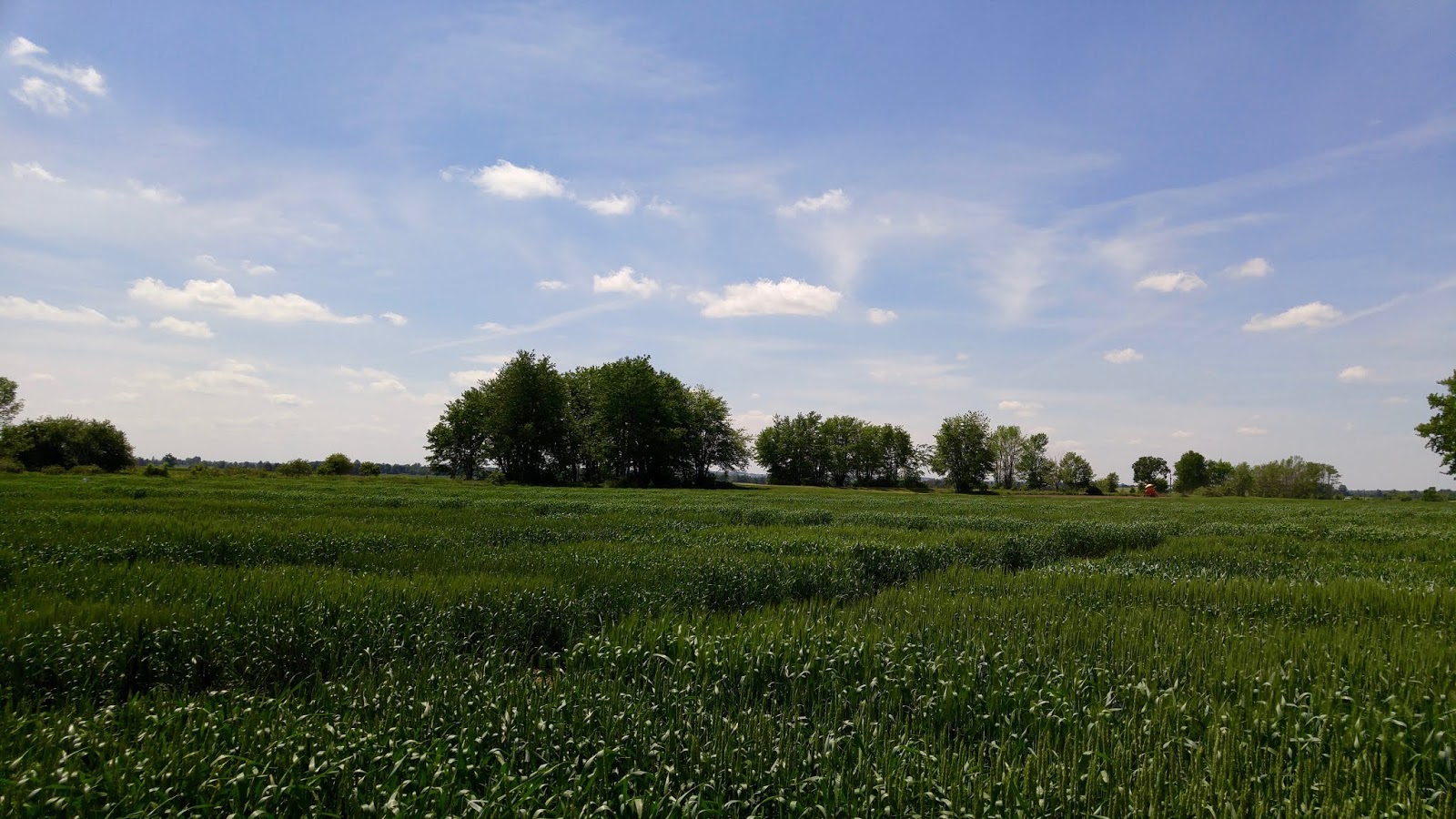
We began our tour at Welsh Brothers Farms where we got to see the farm workers picking the Asparagus right out of the ground with this large tractor vehicles.  It still looks like back breaking work even though there are now large scale machinery to assist.  I was surprised to see how sparse the asparagus fields were and to find out that it is a large investment in time to produce asparagus.  It's not a yearly harvest but takes many years to get a good harvest of great asparagus.


My blogger buddies and I really enjoyed picking the asparagus right out of the ground and eating it.  You really don't have to cook it to eat them.  It's amazing how sweet they are when they are that fresh.  Some of my friends seemed surprised at how the asparagus grows from the ground.  I guess you never think about it when you pick up a perfect bunch of asparagus from the grocery store but there is a whole lot of work that goes into that perfect little green bunch of spears.

We had a chance to check out their processing plant.  There aren't that many steps but probably more than you would thing to get the bundles of asparagus ready.  The ends need to be chopped, they are sorted and packed into bundles and then wrapped with elastics and of course washed and packed in large boxes for shipping to the food terminal or grocery stores.


After our visit to Welsh Brothers Farms we headed to Bonnieheath Estate Winery where chef Tracey Winkworth who I have seen many times making Chef Chuck Hughes look good at trade show food demos.  Chef Tracey along with Liason College students whipped up an unbelievable spread of Asparagus focused dishes.  It was so amazing and we got to eat it outside at the back of the Bonnieheath Estate with a view of the lavendar fields.


I think my favourite dish was these Asparagus fries.  Crunchy goodness.


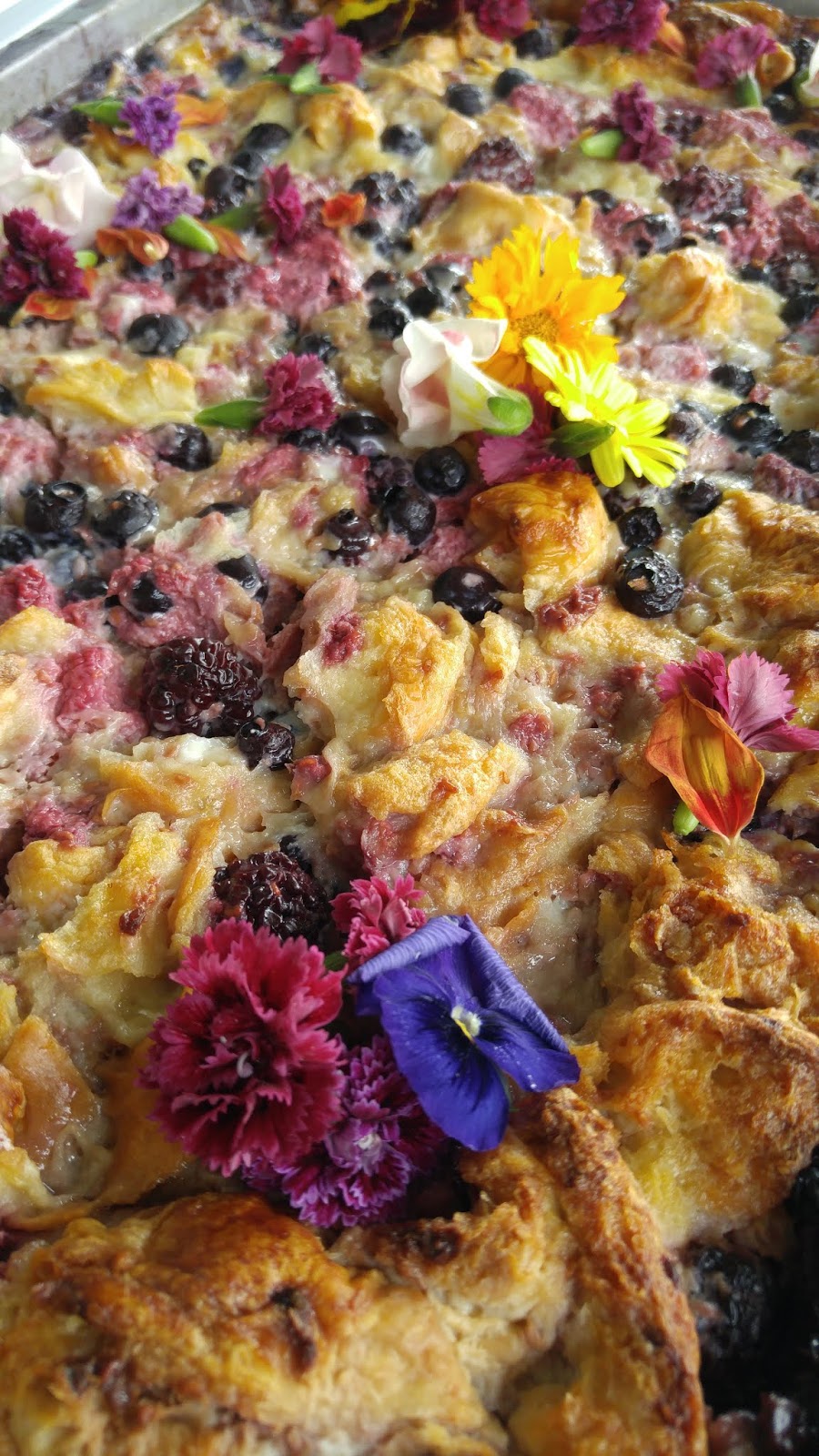
The dessert didn't have any asparagus but it had some lavendar wine in it as a nod to the Lavendar estate.  It was a berry bread pudding with the lavendar wine ice cream.


After lunch we did some food trivia and my team won a great prize and we checked out their little market store for some wine and cider sampling and to purchase some goodies.


We had the best day.  I got to hang out with my favourite blogger buddies and enjoy the farm tour and incredible local food and a beautiful day.

You should visit Bonnieheath estate during their lavendar season.  It's so beautiful there.

It may be late in the season and I am sorry I couldn't post this sooner to remind you to pick up local asparagus but I hope that you can still get some at your local farmers markets and also looking at these food pics and take a different look at your asparagus and prepare them in new ways instead of just steaming them because there are so many things you can do with them from the asparagus fries to a creamy soup.

For more info check out these links:


#Asparabus
Asparagus Farmers of Ontario
T @onasparagus
I: @ontarioasparagus
onasparagus.on.ca

Welsh Brothers Farm
T: @WelshBros
welshbros.ca

Bonnieheath Estate lavendar  & Winery
T: @bonnieheathfarm
I: @bonnieheathestate
bonnieheathestate.ca

Liason College Southcoast
T: @SouthCoastLC
I: liasoncollege
liasonsouthcoast.com

The Foodies Group
T: @thefoodiesgroup
I: @thefoodiesgroup
foodiesonfoot.ca


Monday, July 2, 2018

Spring farm food tour in Wellington County

I live and work in 2 most dense places in Toronto and basically go from underground high rise buildings to large tower offices.  I don't see much green and nature these days so I jumped at the chance to go on one of Farm & Food Care's Farm Tour's organized by the lovely Jennifer from Foodworkx.  I have been on a similar bus tour once before but because I have been busy working I have missed a couple of them so this time I was determined to go.  I love these farm tours because you get to see a whole other side of life and get to meet the people making your food face to face and have the opportunity to ask them questions and find out things you never knew about the food you are eating.  Besides this it's just a really awesome day with fellow food industry people and eating great food too.  I have been very lucky because the last time and this time the weather was spectacular and I heard I missed the 2 rainy and cold days.  For once my timing was excellent.  I think more people should learn what it takes to make their food because the would appreciate it and the people who make it so much more.  The farming and agriculture industry is very hard,  it's weather sensitive and it's a LOT of hard work.  Farmer's markets where the vendor is actually the producer are great because you have a chance to thank those people for their efforts and connect to the people that you can't live without.


We started our tour at Elgersmas' Family Farm where the lovely young couple Andrew and Lindsay Elgersma gave us a tour of their egg production facility which is also where they live.  They have 3 children and 10,000 hens on their family farm in the Elora area.  They also have other day jobs.  And you thought you were busy! Their farm is a family business that has been in Andrew's family since the 1850's but Andrew and Lindsay are taking it into the future with some modern information on how to best produce healthy hens and eggs.  All of their eggs are Omega 3 eggs which means they are fed flax seeds.  Their facility uses what is called an enriched housing system.  It houses smaller more natural sized space with nest boxes, scratch pads and perches. They have a raised cage system so that their waste drops away under them preventing disease from contact. 

Fact 1: Did you know that a hen only lays one egg a day?

Their hens produce 330 a year and in previous years it was only 175.
The eggs go from the conveyor to your store within 4-5 days.  That includes packaging at Burnbrae Farms who distribute it for them.

Fact 2:  Eggs are harder to peel when they are fresh so use your old eggs first if you are going to hard boil them.

Fact 3.  If eggs aren't washed they can be stored at room temperature because they have a protective coating.  If they are washed which is normally how they are sold in supermarkets then they need to be stored in the fridge for up to 5 weeks.

Fact 4.  The color of the egg depends on the color of the hen.   Hens that lay eggs are not the chickens you buy in the grocery store. 

Fact 5.  In Canada their are 1000 egg farmers.


After our tour of the Elgersmas' Farm we headed over to the Wellington Museum & Archives in Fergus enjoy a fantastic lunch using of course the Eggs and beans that are featured on this tour.  

We started off with a fantastic Scotch Egg and amazing bread with 6 bean hummus. There was a buffet featuring Black bean chili, Quinta quinoa salad and a Goat cheese Frittata and salad with local strawberries.

The dessert was a decadent brownie made with beans.  Thanks to Chef Derek Roberts and Jackie Fraser of Fraberts Fresh Foods for the great lunch. The Museum grounds have a gorgeous garden.  While enjoying our dessert we listened to Lynn Weaver from SaskCanola talk about the Canola produced in Saskatchewan and how important it is in export to other countries.


After lunch we jumped back on the bus and our last stop was at the University of Guelph's Elora Research Station.   Dr. Peter Pauls gave us an information session about different beans and legumes and the their studies to produce different varieties of beans that will meet the demands of consummers.

Did you know that there is a Bean Research Program at the world renowned Elora Research Station?

Fact 6.  Canada exports 80-90% of our Bean/Legume crops.


One of the most fun parts of the day was seeing all the food writers, recipe developers and industry people all hop on board for a good ol' wagon ride through the Wheat and Pea fields.  Did I mention that the weather was perfect and we all enjoyed a bit of the warm sun and a fun ride too.


Fact 7.  97% of Canada's farms are family owned.

Fact 8.  According to Statistics Canada there were 193,492 farms in 2016.  That's 5.9% fewer than in 2011.

Fact 9.  The average Canadian farm is around 820 acres which has increased from previous years.


Fact 10.  The average age of a Canadian Farmer is 55 and 28.7 % of Canadian farmers are female.

I always learn many things when I have the opportunity to tours like this and it's why I always like to promote local and Canadian producers because besides producing food for us and other parts of the world they are also part of our local communities and they make a difference in everyone's life.

You can get a 360ยบ view of the different types of hen housing on www. FarmFood360.ca

For more information:   www.FarmFoodCare.org  &  www.RealDirtonFarming.ca


Sunday, April 22, 2018

Earth Day reduce, regrow and rethink

 It's EARTH DAY today and it's a great time to think about how we use our resources every day.   Some environmental experts have said that by 2050 there will be shortages of certain foods in the World.

Lately my focus has been Food Waste because I have noticed I have wasted more food than I could afford to for the cost and what the effects on the environment are.  I struggle with this every time I take a bag full of expired food to the garbage or a bag full of plastic containers to the recycle bin.

Donald Trump likes to say that there isn't any truth to Climate Change and it's not cause by people.  But it's hard to see what's happening in the world and not wonder what's happening.  It's now the 22nd of April and we are finally getting normal spring temperatures after an extremely long winter but we almost had an ice storm as crippling as the one in 2013 in Toronto.  Many people lost power from downed trees but it didn't last as long as the last time but just as crippling for the people affected by it.  Around the world the droughts, floods, hurricanes, tsunami's, earthquakes and more are getting more extreme each year and the polar ice caps, the coral reefs and the shore lines are decreasing.  It's really hard to see the big picture when you are just trying to live your life everyday but what kind of world are we leaving for our children?  A life of GMO food and constant environmental disasters that become normal life?

What can we do?   Try and make decisions that will have lasting effects.  If corporations produced less plastic products that never break down and pollute our landfills and oceans maybe they can think about innovative ways to change their products and productions and people have to choose products that have less of an environmental impact if they can.  I know this is challenging because sometimes we don't have a choice on how the products we use are sold in stores.

We can also teach our children about food.  Yesterday I showed my friend's 3 year old daughter how to regrow vegetable scraps in water by letting her help fill the containers of water.  Hopefully she will watch it sprout over the next few weeks and get excited about it.  Even if we don't grow our own food it's important to be mindful of where it comes from and who is producing it.  If you can go to a great Farmer's Market where the farmers are on hand selling their food then that's a great step in supporting the people that make your food.   If you have a balcony or garden and can grown some food then that's a great thing because you will purchase less packaging and will waste less food.


At the beginning of April I placed a carrot top in a small bowl of water and now 3 weeks later you can see how much it has sprouted.  It can be planted in earth when the weather is a bit warmer.  I tried to see if I could get avocado seeds to sprout but that hasn't been successful.  I am going to try and see what happens to a sprig of cilantro.  The easiest one to regrow is Green Onion.  There isn't much to do except make sure it has clean water at about the height of the white end of the onion and placed in sunlight it will just regrow and sprout up from the centre.


Tomorrow I have organized an Earth Day event to do the same thing and have my coworkers learn how to regrow certain vegetable bits that would normally get discarded  I will turn the wasted bits into the food waste soup I have been making through the past year and we will also attempt to plant some seed packets into one of the small greenhouse boxes that I picked up from Canadian Tire.  This is new to me so I don't know how well it will do but I wanted to try and plant a seed or start something in our current office before all of us move to a new office in May and hope to have a communal little food area that we tend to that can feed the soups and lessen the waste produced by our office.  The building we are going back to is a Leed certified building so we should consider what we contribute to it.

I am constantly trying to improve my bad habits about what I buy, toss and repurpose and hope that more people be mindful of the impact to our future generations from our daily actions.


Friday, February 17, 2017

OCIC launches Transformations

What: Transformations: Stories of Partnership, Resilience and Positive Change in Tanzania
When: Monday, February 13, 2017
Where: Metro Hall - Rotunda, Toronto, ON)

This week I was invited by my friend Lisa Swainston, who works for OCIC (Ontario Council for International Cooperation) invited me to the launch event for a photo exhibit of Transformations: Stories of Partnership, Resilience and Positive Change in Tanzania.
The stories presented were documented by OCIC and Allan Lissner, Praxis Pictures, during a visit to Tanzania in November 2016.
Allan, Lisa and her coworkers travelled to Tanzania to partner with CPAR Canada  and the photo exhibit coincided around the time of International Development Week (IDW).  

Transformations is an award-winning collaborative photojournalism project intended to increase dialogue and further understanding of international partnerships that address complex global challenges.

In this exhibit you will learn about the work of CPAR Tanzania and CPAR Canada to empower farmers and their communities.


The exhibit documents how farmers in rural Tanzania are addressing issues of climate change, food security, gender equity and youth skills development programs. The farmers working with CPAR learn to work with Biogas to create sustainable farming practices to provide for their communities.

Photographer Allan Lissner

Lisa Swainston (OCIC)
The exhibit will be up at Metro Hall until  February 18th, 


Alternatively, the full exhibit is now available online at: http://transformationstories.ca/and there's a short (approx. 6 mins) accompanying video that can be viewed at: http://ocic.on.ca/transformations2017


Saturday, October 15, 2016

Celebrate World Food Day with Pulses


Date:  October 14, 2016
Event: World Food Day #WFD2016
Location:  Planta Toronto - Yorkville
Host:  Chef Michael Smith & Pulse Canada

Special Guests:
Nick Saul, CEO, Community Food Centres Canada
Dr. David Jenkins, Founder of Glycemic Index
Chris Martinageli, Director, of Pulse Canada
Dr. Joyce Boye, Special Ambassador for International Year of Pulses
Lee Moats, Chair Pulse Canada, Pulse Farmer Denis Tremorin, Director Pulse Canada

In Honour of World Food Day I was invited to a great private event at the new Plant Based Restaurant - Planta in Yorkville at the former Pangea Restaurant space on Bay Street, for cocktails and a little bit of information about what Pulses can do for the World.  Pulses are Peas, Beans, Lentils and Chickpeas.  2016 is the International Year of Pulses.

Chef Michael Smith who is a strong supporter of using more Pulses to feed people everyday was the Host of the event.  He did a whole series for Pulse Canada on the use of Pulses around the world.  We produce more pulses than anyone and export more than anyone.  I bet if you visit India you will be eating Canadian Pulses.

The event took place at the highly anticipated Plant-based Restaurant called PLANTA in Yorkville.  I think it's the perfect spot for this restaurant and the perfect time where the trends have been crazy but at the same time I think people are getting tired of eating food that is bad for them and the planet.  I heard about this restaurant not long ago and it was on my radar for places to check out because I love vegetables when prepared properly.  Most vegetarian/vegan restaurants really don't make the food that exciting.  Yeah we all know about Kale salad but what else can you do.  Enter Chef David Lee who has adopted a plant based diet in his own life so naturally it made sense for him to have it crossover into his professional life. In partnership with the Chase Group who is well established they scooped up the prime location in Yorkville and I don't think they did too much to renovate the space but the menu is nothing like anything else in the city.

Although I am not a vegan or even a vegetarian I eat far less meat than I used to and actually enjoy a wide range of vegetables and I have been looking for more ways to introduce pulses to my diet because I have always had vegetables because of my parents European background but less so the pulses,  I had them less often as my mother's knowledge about what to do with them was limited as it is for most people.  This is where Food Education in schools could be used to really make a change.  If kids were taught simple recipes in schools and the nutritional value of cooking with pulses, I am sure it would be shared for generations.

*Pulses are good for so many things.
  • For farmers they are great because they are a sustainable crop that actually enrich the soil instead of depleting it.
  • Good Source of protein
  • Iron rich - one serving of lentils contains 1.5 times as much iron as 3 oz. serving of steak.
  • Good source of potassium
  • Excellent source of folate - chickpeas contain 3x more folate than a serving of kale
  • And fibre - all pulses have 4x more fibre than brown rice.
  • Gluten free
  • Sodium free
  • Trans Fat-free
  • Crops are Drought-tolerant
  • Produce a low carbon footprint
  • Pulses require 19L of water to produce 1gram of protein compared to Meat which requires 68L of water to produce 1 gram of protein
* source Pulse Canada

The Cost per serving of lentils is $0.16 Canadian compared to:
Beef - $1.36, Pork - $0.92 and Chicken $0.55

Lentils and peas take not longer to cook than pasta or rice.

The guest speakers:
  • Nick Saul, CEO, Community Food Centres
  • Lee Moats, Chair, Pulse Canada Pulse Farmer
  • Denis Tremorin, Director, Sustainability Pulse Canada
  • Dr. David Jenkins, Canadian Research Chair in Nutrition & Metabolism and Founder of the Glycemic Index
  • not pictured:  Chris Marinageli, Director, Nutrition Science and Regulatory Affairs, Pulse Canada
  • and Dr. Joyce Boye, my photo wasn't good enough to post.. she is FAO Special Ambassador for the IYP for North America, Director, Research, Development and Technology Transfer Agriculture & Agri-Food Canada


Nick Saul, CEO of Community Food Centres who said, "the act of cooking is political", that stuck with me because you choose what you want our governments and corporations to do by what you choose to buy and eat and it contributes to what happens around the world.

Dr. David Jenkins talked about how we need to switch to eating more pulses to sustain the environment because we are losing species because we can't sustain the food system.  He basically spoke about the benefit to the world in the environment and health.

Dr. Joyce Boye spoke about how the population will increase in the next 20 years.  We are already having problems feeding everyone in the world and if we don't start making changes we won't be able to feed the increasing population around the globe.

Farmer Lee Moats spoke about how growing pulses is great for the economy because of the amount we export and how it is the best crop for farmers to grow because it uses less water and yields the best soil for crop rotation.

As you can see it's a Win Win thing.  Families can be fed for little money using pulses and improve their health by getting plant proteins instead of meat proteins which have other health risks with increased allergies and all of the antibiotics and other issues that come from eating meat.  While i still love the taste of meat I think it really makes sense to limit the consumption and switch to more consumption of pulses instead.

As you can see there is a lot of information about this subject.  It really is a domino effect,  eating pulses will not only sustain the environment it will lower the cost of health care in the future with a tiny adjustment in what we plant and eat.

Now let's talk about the taste of the food.  It always comes back to that.

I wish I had better and more photos of the food we sampled because it was amazing.  You really didn't miss the fact that there was no meat in it because it was full of flavour and had the mouth feel or Umami that you crave and get from all the fat, sugar, salt etc in less healthy food.

We tried:

  • Chickpea Fries with za'atar and lemon aioli
  • Queso Dip, black beans, pickled vegetables, cashew crema on tortilla chips
  • Cauliflower Tots, truffle parmesan, lemon aioli
We also had a carrot cake smoothie.  All the appetizers were perfectly seasoned with spices to enhance the flavour.  I am the Queen of Spice and really that makes the biggest difference when making vegetables go from boring to fantastic.  What's a tomato without basil?

Yes this is a long post but the statistics are incredible and I am only skimming the surface of this subject.

For more information:
Pulse Canada's website:  http://www.pulsecanada.com/
Chef Michael Smith recipes: http://chefmichaelsmith.com/

Hashtags #lovepulses
                #WFD2016
                #pulsepledge

Support Community Food Centres Canada at:  http://cfccanada.ca/

Wednesday, October 10, 2012

Are Beef scares turning people into Vegetarians?

Are you afraid of Meat?


With the current Recall of Beef from the XL Foods plant in the news lately it has been scaring consumers into being afraid of what they eat.   Is this a good thing?  I don't know but I think it's sad that the actions of One processing plant can take down the whole Beef Industry.

Personally I haven't bought any meat since the Beef Recall but for a couple of reasons.   I like to get hormone free meats when I can but I can't afford to buy a lot of meat right now so I haven't bought that much meat in general.  

Although I haven't bought any meat when I went to Whole Foods Market on Thanksgiving day there were a whole lot of people standing in front of the Meat Counter.   There was a huge sign hanging above the counter listing where they receive their meat from,  like local farmers like Baretta Farms for their chickens and other local farms and stores like Cumbrae meats for their other meat.

When you buy your meats at a regular grocery store you don't know where your meat is coming from so nobody is accountable until multiple people get sick.  

When I went to The Big Carrot Market to interview nutritionist Julie Daniluk for my documentary I also interviewed their PR person who told me they track all their vendors and can track back to the source of where they are getting their products at any time.  They have a relatively small meat section but their meats are generally from local suppliers such as Baretta Farms again or Yorkshire Valley.

There are some good Food Markets like Organic Garage in Oakville who try and go out of their way to carry quality safe products but since ever grocery store has to order their meat and produce from other suppliers can they always trust their sources but they are responsible and ethical enough to pull anything right away if there is a problem but it takes a bit longer for the larger chains to get it through their systems to make a change?   

Are people being scared into becoming vegetarians?  

The subjects of my EcoLoser documentary had decided to give up red meat as part of their monthly challenges a few months ago.  They say they don't miss the meat and they decided to give it up because of the amount of resources it takes to produce beef.    

But on the flip side..   what happens if everyone is scared into giving up Beef?   What happens to the local farmers who produce Beef and other products?   Will they be driven out of business?

Think of the Beef industry in Alberta, what if everyone stopped eating beef from Alberta?   
What would happen to their economy?
It's sad to think that ethical farmers may be driven out of business because of unethical processing plants.  

Things need to change in the food production industry.   Processing plants need to be accountable and transparent and be fined for any health infractions or shut down right away.    If they feel it on their bottom line things will change.   If their bottom line is increased by lax practices then we are in BIG TROUBLE in the future.

Have you changed the way you think about your food?  
Have you been considering becoming vegetarian because of the recalls?
Have you changed the stores you shop in?

Over the past year I have tried to make an effort to buy as much local, organic and hormone and pesticide free products as I can but something like E. coli can happen to even Organic producers if proper food handling practices aren't strictly enforced.

In a city full of condos we are at the mercy of these food providers as we can't exactly have a cow or chickens on our balconies.

We need to find a way to make people accountable for the food they produce and make sure that they are doing the right thing or they need to be shut down.

Sometimes I think I should become a vegetarian for the fact that I know it would be better for me financially,  better for the environment and also better for my weight, but unfortunately I love food and love variety in food and like the taste of beef and chicken and pork.   But I am going to be very careful in the future of where my food comes from and maybe buy less and maybe pay more for suppliers that have extra measures in place for food safety.

Be Safe... know where your food comes from and make sure you store and cook your food properly.